What Is Lead Generation for Websites? A Practical Guide for Businesses in 2026
- OfflineOnline team
- Jan 3
- 4 min read

In 2026, almost every business has a website. Yet, most businesses still struggle with the same problem:
“My website exists, but it doesn’t bring enquiries.”
This gap between having a website and getting business from it is where lead generation becomes critical.
Lead generation is no longer a marketing buzzword. It is the core purpose of a modern business website.
This guide explains what website lead generation really means, why most websites fail at it, and how businesses should approach lead generation in 2026.
What Does Lead Generation Mean for a Website?
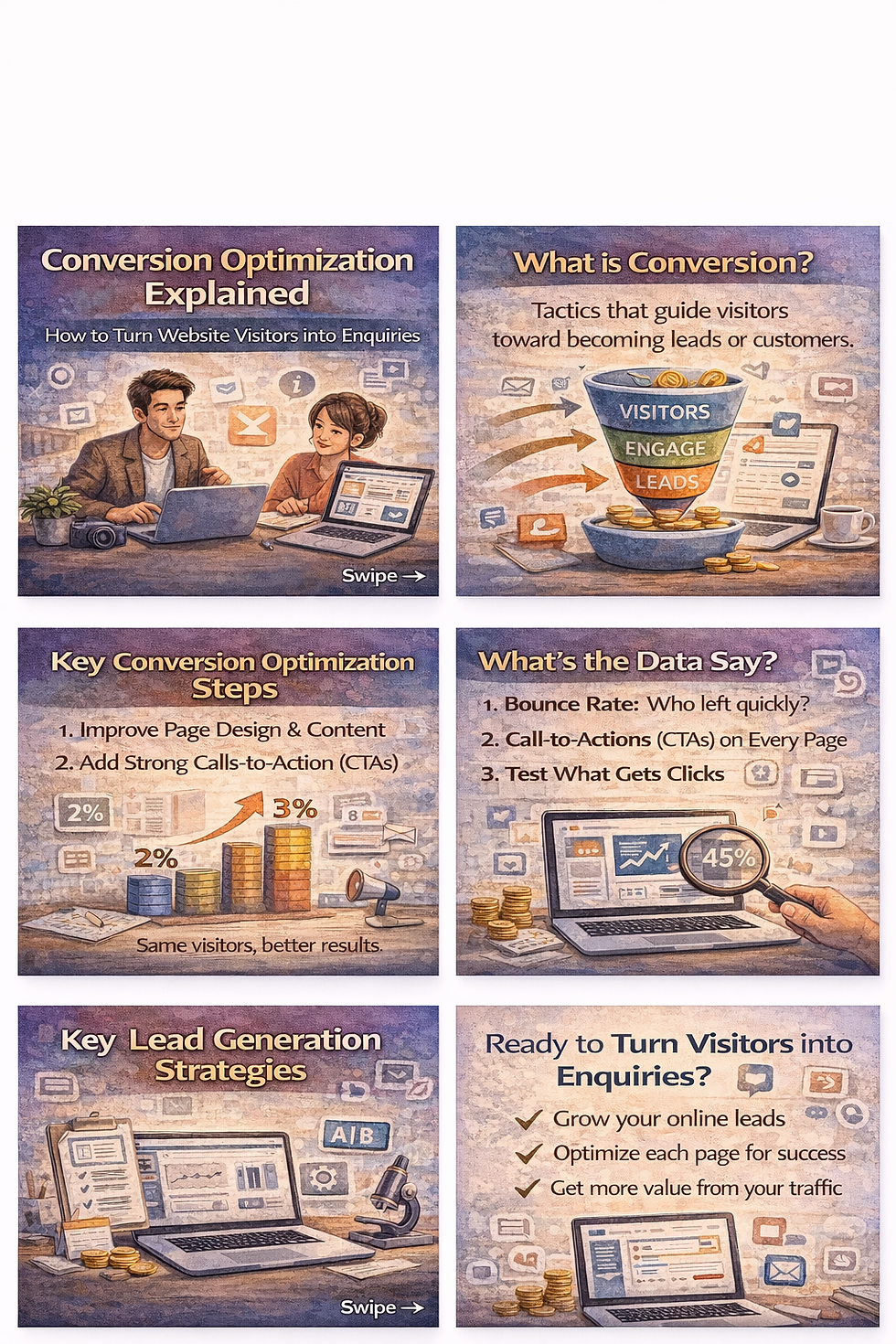
Lead generation means converting website visitors into potential customers.
A “lead” is any action that shows intent or interest, such as:
A phone call
A WhatsApp message
A contact form submission
A consultation booking
A quotation or callback request
If people visit your website and leave without doing any of the above, your website is not generating leads — even if it looks professional.
In simple terms:
Traffic is attention. Leads are opportunity.
Websites must be built to convert attention into opportunity.
Why Lead Generation Matters More Than Ever in 2026
The digital landscape has changed significantly.
1️⃣ Businesses Are Competing for the Same Attention
Users compare multiple options within minutes. If your website does not guide them clearly, they move on.
2️⃣ Trust Takes Longer to Build
People are cautious. They look for reassurance before contacting a business.
3️⃣ Attention Spans Are Short
Visitors decide quickly whether a website is worth engaging with.
Because of this, websites that do not actively guide users toward action lose potential customers every day.

Lead Generation Is Not the Same as Traffic
One of the biggest misconceptions businesses have is believing that more traffic automatically means more leads.
That is not true.
A website can have:
High traffic
Good rankings
Strong visuals
And still generate zero enquiries.
Why?
Because traffic only brings visitors. Lead generation converts visitors into prospects.
Without clear lead-generation elements, traffic simply leaves.
Types of Website Leads (You Should Know This)
Different businesses generate different types of leads. A good website supports multiple lead paths without confusion.
Common website lead types include:
📞 Phone Call Leads
Still one of the strongest signals of high intent, especially for local businesses.
💬 WhatsApp or Chat Leads
Preferred by mobile users who want quick responses.
📝 Form Enquiries
Useful for service-based businesses, B2B, and consultation-driven models.
📅 Booking or Appointment Requests
High-quality leads because they indicate readiness to engage.
A lead-generating website makes these options easy, visible, and intuitive.
Why Most Websites Fail at Lead Generation
Despite good intentions, many websites fail to generate leads due to common mistakes.
❌ Unclear Messaging
If visitors don’t understand:
What the business does
Who it is for
How it helps
They leave.
Clarity always beats creativity when it comes to lead generation.
❌ No Clear Call-to-Action (CTA)
Many websites describe services well but never clearly tell users what to do next.
Without a strong CTA, users hesitate.
❌ Too Many Options
Offering too many buttons, links, or actions creates confusion.
When everything is important, nothing feels urgent.
❌ Weak Trust Signals
If users do not feel confident:
They won’t call
They won’t message
They won’t fill forms
Trust is not optional in 2026.
❌ Poor Mobile Experience
Most users visit websites on mobile devices.
If:
Buttons are hard to click
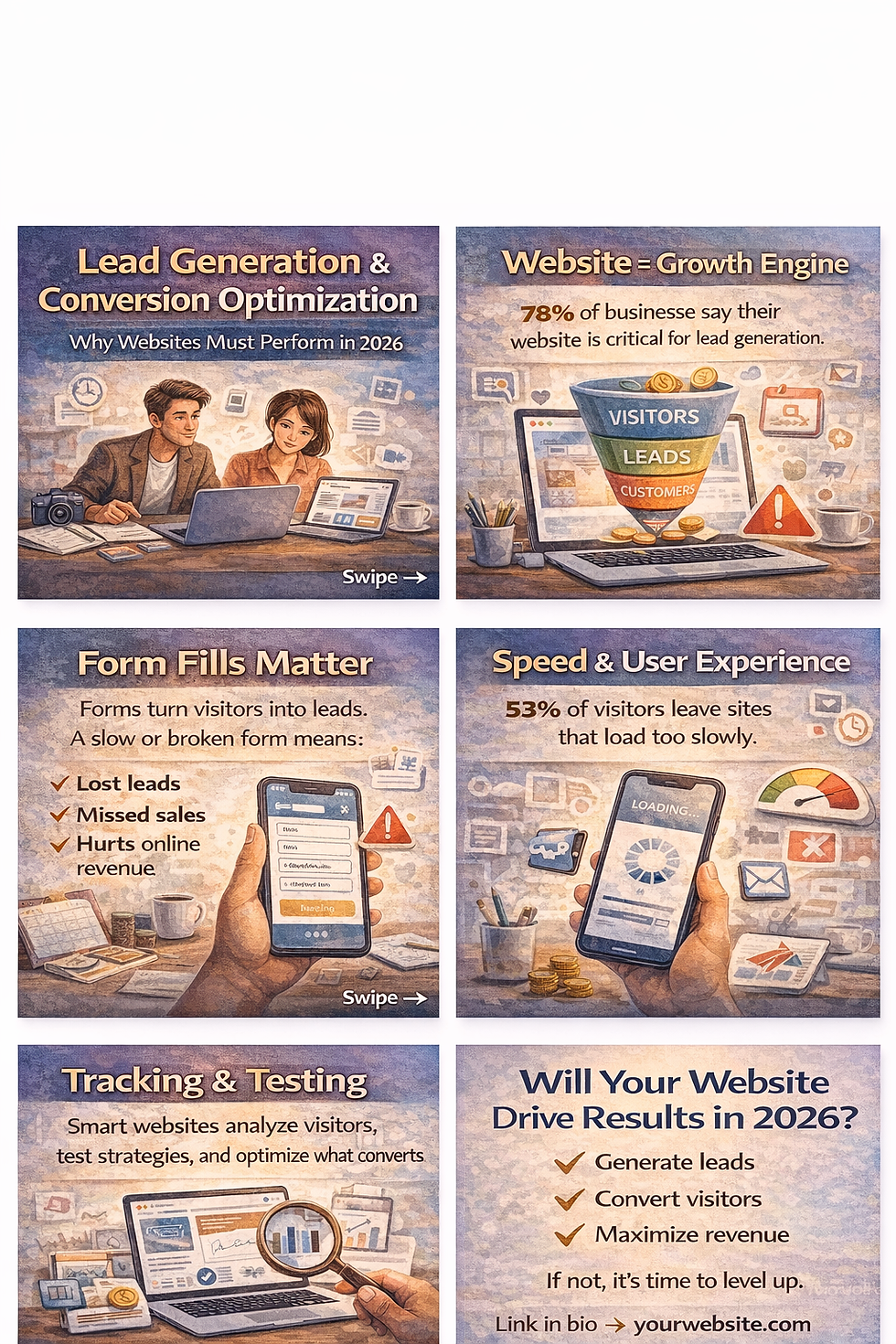
Pages load slowly
Forms are difficult to fill
Leads drop immediately.
Core Elements of a Lead-Generating Website
Lead generation is not one feature — it is a system.
A website designed for lead generation includes the following components working together:
1️⃣ Clear Value Proposition (Above the Fold)
The top section of the website should instantly communicate:
What problem you solve
Who your service is for
Why someone should choose you
If this is not clear within seconds, visitors leave.
2️⃣ One Primary Goal Per Page
Each page should push one main action, such as:
“Call Now”
“Get a Quote”
“Book a Consultation”
Secondary actions can exist, but they should not compete with the main goal.
3️⃣ Strong and Visible CTAs
Effective CTAs:
Use action-oriented language
Are visible without excessive scrolling
Appear multiple times naturally
Are optimised for mobile
Examples:
“Get a Free Consultation”
“Talk to an Expert”
“Request a Callback”
4️⃣ Trust-Building Elements
Trust removes hesitation.
Effective trust elements include:
Client testimonials
Google reviews
Real images
Clear contact details
Transparent business information
A visitor who trusts you is far more likely to enquire.
5️⃣ Simple, Friction-Free Forms
Forms should:
Ask only necessary information
Be easy to fill on mobile
Clearly explain what happens next
Long or complicated forms reduce submissions.
Can Websites Generate Leads Without Paid Ads?
Yes — absolutely.
A well-structured website can generate leads organically through:
Search engine traffic
Google Business Profile visits
Social media referrals
Direct visits
Paid ads amplify results, but they cannot compensate for a weak website.
If the website is not lead-ready, ads only increase bounce rate.
Lead Generation Is a Long-Term Asset, Not a One-Time Setup
Many businesses treat lead generation as a campaign.
In reality, a website that generates leads consistently becomes a long-term business asset.
Over time:
Content improves visibility
Trust builds with repeat visitors
Conversion rates increase
This is why lead generation must be part of website strategy from day one.
How Lead Generation Connects with Conversion Optimization
Lead generation brings opportunities. Conversion optimization improves results.
Together, they create websites that:
Work 24×7
Support business growth
Reduce dependency on ads
To understand how both work together, read our pillar guide on lead generation and conversion optimization for websites.
Final Thoughts
In 2026, a website without lead generation is incomplete.
A modern business website must:
Guide visitors clearly
Build trust quickly
Make action easy
Convert attention into enquiries
If your website exists but doesn’t generate leads, the issue is not visibility — it is structure and intent.
Lead generation is not optional anymore. It is the foundation of online business growth.
Comments