Conversion Optimization Explained: How to Turn Website Visitors into Enquiries
- OfflineOnline team
- Jan 3
- 4 min read

Many businesses say the same thing in 2026:
This situation is far more common than people realize—and it has nothing to do with traffic.
It is almost always a conversion problem.
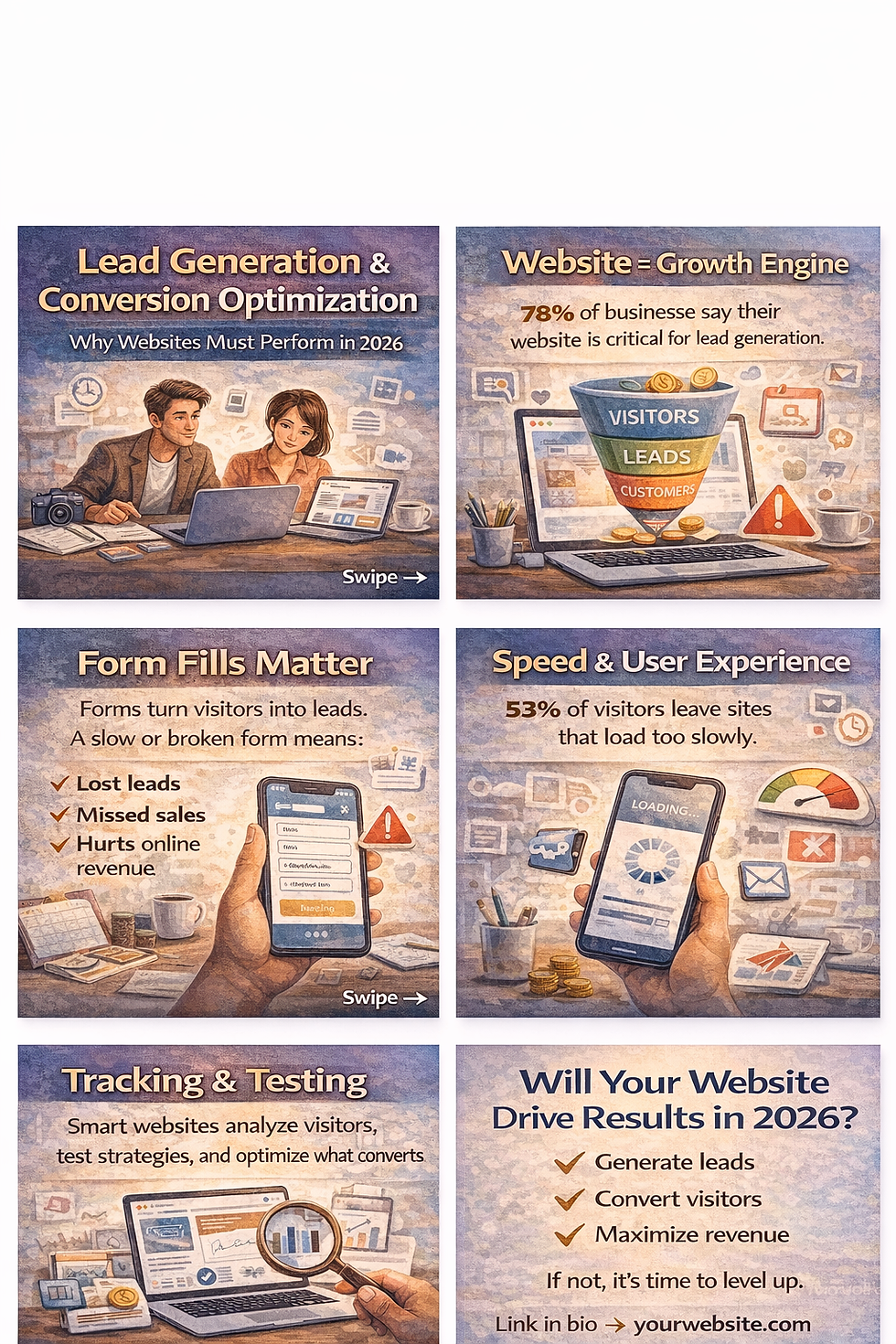
This is where conversion optimization becomes essential.While lead generation focuses on bringing people to your website, conversion optimization ensures that more of those people actually take action.
What Is Conversion Optimization?
Conversion optimization is the process of improving a website so that a higher percentage of visitors complete a desired action.
These actions may include:
Calling the business
Sending a WhatsApp message
Filling out a contact form
Booking a consultation
Requesting a quote
If visitors come to your website but leave without doing any of these, your website is not converting.
In simple terms:
Conversion optimization turns visits into enquiries.

Why Conversion Optimization Matters More Than Traffic in 2026
In the past, businesses focused on increasing traffic:
More visitors
More impressions
More page views
But traffic alone does not guarantee results.
Consider this example:
Website A: 2,000 visitors → 10 enquiries
Website B: 800 visitors → 25 enquiries
Website B is clearly performing better, even with less traffic.
In 2026, smart businesses focus on conversion rate, not vanity metrics.
Traffic vs Conversion: Understanding the Difference
Traffic answers the question:
How many people visited my website?
Conversion answers the question:
How many people took action?
A website that attracts visitors but fails to convert them:
Wastes marketing spend
Misses business opportunities
Creates false confidence
Conversion optimization fixes this gap.
Why Most Websites Fail to Convert Visitors
Most websites are built with good intentions, but several common issues stop visitors from taking action.
❌ Unclear Purpose
If a visitor cannot quickly understand:
What the business offers
Who it is for
What makes it different
They leave.
Clarity is the foundation of conversion.
❌ No Clear Next Step
Many websites describe services in detail but never clearly guide users on what to do next.
Without direction, visitors hesitate—and hesitation kills conversions.
❌ Too Much Distraction
Too many menus, pop-ups, animations, or competing messages overwhelm visitors.
When users feel overloaded, they choose the safest option: leaving.
❌ Lack of Trust
Visitors hesitate when:
Reviews are missing
Contact details are unclear
The business feels anonymous
Trust must be earned before conversion happens.
❌ Poor Mobile Experience
Most website visitors use mobile devices.
If a site:
Loads slowly
Has tiny buttons
Requires too much typing
Visitors leave without enquiring.
Core Principles of Conversion Optimization
Conversion optimization is not about tricks or manipulation. It is about reducing friction and increasing clarity.
A high-converting website follows these principles:
1️⃣ Clear and Focused Page Structure
Each page should have:
One main message
One primary goal
A logical flow
Visitors should never feel lost.
2️⃣ Strong Call-to-Action (CTA)
CTAs tell visitors what to do next.
Effective CTAs:
Use action-oriented language
Are visually noticeable
Appear at logical points on the page
Work well on mobile
Examples:
“Get a Free Quote”
“Book a Consultation”
“Talk to an Expert”
Weak CTAs like “Submit” or “Click Here” reduce conversions.
3️⃣ Trust Signals at the Right Places
Trust signals reassure visitors before they take action.
These include:
Client testimonials
Google reviews
Case highlights
Real images
Clear contact information
Trust signals are most effective when placed near CTAs.
4️⃣ Simplicity Over Complexity
Conversion-focused websites remove unnecessary elements.
This includes:
Reducing form fields
Simplifying navigation
Removing irrelevant content
Simplicity improves decision-making.
5️⃣ Mobile-First Optimization
Conversion optimization today is mobile-first by default.
This means:
Fast loading pages
Click-to-call buttons
WhatsApp integration
Short, easy forms
If mobile users struggle, conversions drop immediately.
Small Conversion Improvements Can Create Big Results
One of the biggest advantages of conversion optimization is leverage.
Even small improvements can lead to noticeable growth.
Examples:
Changing CTA text
Repositioning a contact button
Improving page speed
Adding testimonials
These changes often increase enquiries without increasing traffic.
Conversion Optimization Is an Ongoing Process
Conversion optimization is not a one-time task.
User behavior changes. Competition evolves. Expectations rise.
A performance-focused website:
Observes user behavior
Tests improvements
Refines structure over time
This is how websites stay effective in the long run.
How Conversion Optimization Supports Lead Generation
Lead generation brings visitors. Conversion optimization turns those visitors into enquiries.
Without conversion optimization:
Lead generation efforts underperform
Marketing costs increase
Growth becomes unpredictable
Together, these two strategies form the foundation of modern website performance.
To see how both work together, read our pillar guide on lead generation and conversion optimization for websites in 2026.
Signs Your Website Needs Conversion Optimization
You should consider conversion optimization if:
Visitors don’t contact you
Bounce rate is high
Mobile users drop off quickly
Traffic increased but enquiries didn’t
These are signs of structural issues—not marketing problems.
Conversion Optimization Is About Respecting the User
At its core, conversion optimization respects:
User time
User attention
User decision-making
It helps visitors:
Understand quickly
Trust easily
Act confidently
That’s why optimized websites always outperform visually impressive but confusing ones.
Final Thoughts
In 2026, traffic alone is not success.
Action is success.
A modern website must:
Guide visitors clearly
Remove hesitation
Build trust
Make action easy
If your website gets visits but not enquiries, conversion optimization is no longer optional—it is essential.

Comments